
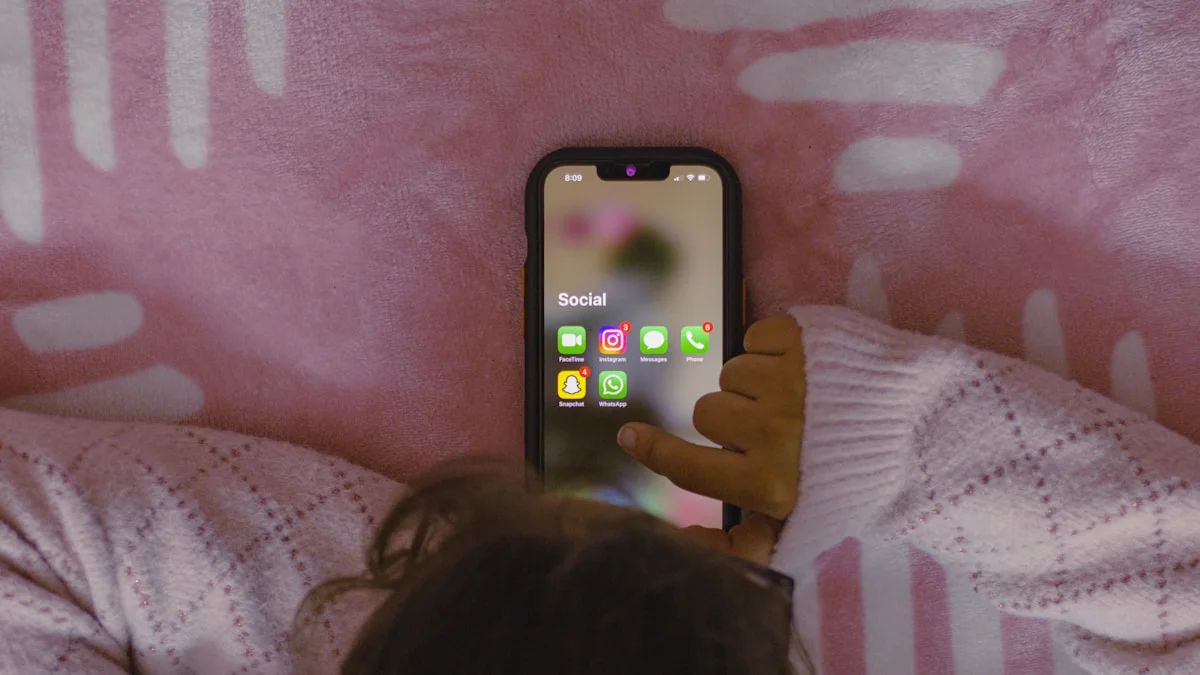
I still remember the exact moment I knew I had a problem.
It was 2:47 AM on a Tuesday. I had work at 8 AM. I’d been scrolling through Instagram Reels for the past four hours, watching strangers do things I’d never do, buy things I’d never buy, and live lives I’d never live. My thumb moved automatically. Swipe up. Swipe up. Swipe up.
When I finally checked my phone’s screen time that week, the number hit me like a punch to the gut: 63 hours.
That’s 9 hours per day. More than I spent sleeping. More than I spent working. More than I spent with actual humans.
I was living my life through a 6-inch rectangle.
The Statistics That Finally Woke Me Up
When I started researching, I realized I wasn’t alone. Not even close.
- 210 million people worldwide are affected by social media and internet addiction
- The average person now spends 4.6 hours daily on their phone — that’s roughly 70 full days per year
- 82% of Gen Z believe they’re addicted to social media
- People who spend 5+ hours daily on screens are 71% more likely to exhibit suicide risk factors
Here’s the one that really got me: Over a lifetime, the average person will spend 12 years staring at their phone.
Twelve years.
I did the math on my own usage. At 9 hours per day, I was on track to lose 20+ years of my life to scrolling.
Why Everything I Tried Before Failed
Before I found what worked, I tried everything. And I mean everything.
The “Just Use Willpower” Approach
Success rate: 0%
I’d delete Instagram. Feel good for about 3 hours. Then re-download it “just to check something.” Within a week, I’d be back to 8+ hours.
The problem? Willpower is a finite resource. And social media apps are designed by teams of the smartest engineers in the world whose literal job is to bypass your willpower.
Built-in Screen Time Limits
Success rate: Maybe 10%
Apple’s Screen Time and Android’s Digital Wellbeing have a fatal flaw: the “Ignore Limit” button.
Every time that popup appeared, my brain already knew what to do. Click. Click. Keep scrolling.
It’s like putting a lock on the cookie jar but leaving the key right next to it.
App Blockers (Opal, Freedom, Forest)
Success rate: About 40%
These were better. Apps like Opal actually make it harder to bypass limits. Forest gamifies staying off your phone with cute virtual trees.
But here’s what I realized: blocking isn’t enough.
When you just block access to something addictive, you’re left with a void. Your brain still craves that dopamine hit. So you either:
- Find a way around the block
- Replace it with something equally mindless
- Feel miserable until the block lifts
None of these solve the underlying problem.
The Insight That Changed Everything
One sleepless night (ironic, I know), I came across a psychology study about dopamine and habit replacement.
The key finding: You can’t just remove a dopamine source. You have to replace it with something that provides similar neurological rewards.
This is why smokers gain weight when quitting — they replace nicotine dopamine with food dopamine. It’s why people switch from Instagram to TikTok when they delete Instagram.
Your brain doesn’t want to scroll. Your brain wants dopamine.
And here’s the thing about exercise: it releases dopamine, endorphins, and serotonin. It’s essentially a legal drug cocktail that makes you feel amazing.
So what if, instead of just blocking my phone, I replaced the behavior with something that gives me the same chemical reward?
The Strategy That Actually Worked
I started with a simple rule: Before I could open any social media app, I had to do 10 pushups.
That’s it. Not a 2-hour gym session. Not a complex workout routine. Just 10 pushups.
Week 1: The Struggle
The first few days were brutal. I reached for my phone probably 50+ times a day out of pure habit. Each time, I had to stop, drop, and do 10 pushups.
By day 3, my arms were sore. By day 5, I was actively avoiding picking up my phone because I didn’t want to do more pushups.
Something was working.
Week 2: The Shift
Something interesting started happening. The pushups became less of a punishment and more of a trigger for different behavior.
I’d do my 10 pushups, and instead of immediately grabbing my phone, I’d think: “Well, I’m already up. Maybe I’ll grab water.” Then: “I might as well respond to that email real quick.”
The physical act of getting off the couch literally interrupted my autopilot scrolling behavior.
My screen time dropped to 5 hours.
Week 3: The Compound Effect
Now I was doing 200+ pushups a day (20 phone checks × 10 pushups). My chest was actually getting bigger. My posture improved. I had more energy.
And here’s the wild part: I started looking forward to the pushups more than the scrolling.
The dopamine hit from completing a set of pushups — the small sense of accomplishment, the physical sensation — was actually more satisfying than the endless scroll.
Screen time: 3 hours.
Week 4 and Beyond: The New Normal
By week 4, something clicked. I wasn’t fighting my phone anymore. I’d naturally reach for it less because:
- The automatic habit loop was broken
- I had a physically satisfying alternative
- My baseline dopamine regulation improved from regular exercise
Current screen time: 1.5 to 2 hours per day.
And honestly? Those 2 hours are intentional. Texting friends. Looking up information. Occasional entertainment. Not mindless scrolling.
The Science Behind Why This Works
After my personal experiment, I dove into the research to understand why this approach worked when others didn’t.
Habit Loop Interruption
According to behavioral psychology, every habit has three parts: cue, routine, reward.
For doomscrolling:
- Cue: Boredom, anxiety, or simply seeing your phone
- Routine: Open app, scroll
- Reward: Dopamine hits from novel content
My pushup rule didn’t try to eliminate the cue (impossible) or remove the reward (leaves a void). It replaced the routine with something equally rewarding but healthier.
Dopamine Replacement, Not Elimination
Exercise triggers dopamine release in the brain. A 2019 study in Neuropsychopharmacology found that even brief bouts of exercise can increase dopamine levels by up to 50%.
This is crucial. You’re not depriving your brain of dopamine — you’re giving it a better source.
Physical Friction Creates Mental Space
There’s a reason standing desks help people focus. Physical state changes mental state.
When you’re lying on the couch, your body is in “consumption mode.” When you stand up and do pushups, you shift into “action mode.” This physical reset gives your prefrontal cortex (the rational part of your brain) a chance to catch up to your lizard brain.
How I Systematized This (And Built an App)
After a few months of my manual pushup system, I realized three things:
- Tracking was a pain. I had no idea how many pushups I’d actually done.
- Verification was honor-system. On lazy days, I’d “forget” the pushups.
- Other people could benefit from this. I wasn’t special. This approach could work for anyone.
So I built RepsForReels.
The core concept is simple:
- The app blocks social media until you complete exercises
- AI-powered pose detection watches through your camera to verify you actually did the reps (no cheating!)
- You earn screen time minutes based on exercises completed
- More reps = more reels
It’s the exact system I used manually, but automated and verified.
What I Learned (That You Can Apply Today)
You don’t need an app to start. Here’s what you can do right now:
1. Pick One Physical Trigger
Choose ONE exercise that you’ll do before opening your most-used app. Make it:
- Simple: Something you can do anywhere
- Short: 30 seconds max
- Challenging enough to interrupt autopilot
Good options: Pushups, squats, jumping jacks, wall sits
2. Start Stupidly Small
Don’t start with 50 pushups. Start with 5. Maybe even 3. The goal is to build the habit loop first, then increase intensity.
3. Track Your Numbers
Use your phone’s built-in screen time feature to track progress. Seeing the number go down is incredibly motivating.
4. Tell Someone
Accountability matters. Tell a friend what you’re doing. Better yet, challenge them to join you.
5. Expect the First Week to Suck
Your brain will resist. Hard. It’s been trained to expect instant dopamine gratification. Breaking that expectation is uncomfortable.
But if you can make it through week 1, week 2 gets easier. By week 3, you’ll start feeling the benefits. By week 4, you won’t want to go back.
The Bigger Picture
I want to be clear about something: I’m not anti-technology or anti-social media. Instagram has connected me with old friends. YouTube has taught me skills. TikTok has genuinely made me laugh.
The problem isn’t the apps themselves. It’s the compulsive, mindless, hours-long scrolling that provides no real value while stealing our most precious resource: time.
Since cutting my screen time, I’ve:
- Read 23 books (I read 2 the year before)
- Started a company
- Improved my physical health significantly
- Actually slept at reasonable hours
- Had deeper conversations with people I care about
I didn’t gain these things by removing something from my life. I gained them by replacing a bad habit with a good one.
Your Turn
Here’s my challenge to you: For the next 7 days, before opening any social media app, do 5 pushups (or any exercise of your choice).
That’s it. 5 pushups. See what happens.
If it works — if you notice yourself reaching for your phone less, if your screen time drops, if you feel a little bit better — then you have proof that this approach works for you too.
And if you want to take it to the next level with AI-verified exercises and automatic app blocking, well, that’s why I built RepsForReels.
No reps, no reels. It’s that simple.
Have your own screen time struggle story? I’d love to hear it. Drop a comment below or reach out on X.
References and Further Reading
- DemandSage. (2026). Social Media Addiction Statistics
- CDC. (2025). Associations Between Screen Time Use and Health Outcomes Among US Teenagers
- Harvard Health. (2025). Doomscrolling Dangers
- Cleveland Clinic. (2025). Everything You Need to Know About Doomscrolling
- Strava Year in Sport Report. (2025). Doomscrolling is Out, Movement is In